


CloudSecureTech reports that external actors are responsible for 65% of data breaches, while employees account for 35%, primarily due to mistakes rather than malicious intent. If you’ve ever felt uneasy about whether your network can withstand today’s relentless threats, you’re not alone.
As Nahjee Maybin, CEO of Kenyatta Computer Services, says, “A single overlooked vulnerability can unravel your entire network security framework.”
You’re about to discover a powerful approach to dealing with cyber risks, backed by real-world insights. Ready to learn how to protect your valuable data and maintain customer trust without losing sleep? Let’s jump right in.
Understanding the Core of Network Vulnerabilities
When addressing network vulnerabilities, you need to see them as potential entry points attackers exploit. These weak spots could be anything from poorly configured routers to unchanged default credentials. Even a single lapse can cascade into massive business downtime or data loss.
In 2021, Microsoft lost millions of customer records due to an unpatched server. The incident involved a breach of approximately 38 million user records, exposed through a flaw in Microsoft’s Power Apps software. This mistake stands among the largest data leaks in recent history and has affected customers around the globe.
This massive leak highlights that even industry giants can become victims of overlooked vulnerabilities in their systems. Take inventory of all devices and applications connected to your network. You’ll want a high-level view of what’s running so you can spot any anomalies. It’s often the unmonitored corners of your network that cybercriminals love most.
Spotting Network Security Vulnerabilities Before Hackers Do
Some network security vulnerabilities are easy to miss until it’s too late. Outdated firmware, lack of encryption, or unused open ports can be silent red flags. Penetration testing and vulnerability assessments mimic the tactics of actual attackers, helping you find weaknesses early.
Regular system patching is crucial. An unpatched operating system or application is one of the most common ways hackers gain entry. Automate your patch management process to keep every device up to date. Meanwhile, keep detailed logs to track any unusual activity. If something seems off, investigate immediately.
Exploring Types of Vulnerabilities in Network Security You Must Know
All types of vulnerabilities in network security can undermine your operations, but a few in particular crop up repeatedly. By understanding where these pitfalls lurk, you can act fast to neutralize them. Here are three of the most prevalent:
- Misconfigured Firewalls
Leaving ports open or sticking with default settings hands intruders a virtual key to your system. A properly tuned firewall filters out suspicious traffic before it can reach your critical data. Schedule frequent configuration reviews—sometimes, even a minor tweak can mean the difference between a safe network and a major breach. - Weak Authentication
Short, guessable passwords or a lack of multi-factor authentication (MFA) are some of the most common cybersecurity vulnerabilities. Attackers bank on users who reuse simple passwords across multiple platforms. Enforcing strong passphrases and layering MFA not only complicates brute-force attacks but also deters opportunistic hackers looking for easy wins. - Unrestricted User Permissions
Allowing blanket access to networks and data is a major oversight. It’s tempting to give employees wide-ranging privileges for the sake of convenience, but this is also a direct invitation for malicious insiders—or hackers who’ve hijacked an employee account—to roam freely. Use the principle of least privilege: grant each user only the minimum required access to perform their role. - Outdated or Unpatched Systems
Unpatched operating systems and applications are like leaving your doors wide open. Cybercriminals regularly scan for known software flaws, so stay current with updates and run scheduled patches to eliminate known exploits. - Unsecured Remote Access
Remote work is convenient but often introduces new security holes. RDP (Remote Desktop Protocol) or VPNs without proper encryption or MFA can be easy prey for attackers. Carefully configure remote access tools and monitor connection logs. - Insufficient Logging and Monitoring
If you’re not logging and monitoring network events, you won’t know something’s wrong until it’s too late. Intrusion Detection Systems (IDS) and Security Information and Event Management (SIEM) platforms alert you to suspicious activity in real time. - Missing or Weak Encryption
Data traveling across your network in plaintext is low-hanging fruit for cybercriminals. Ensure sensitive information (like login credentials and personal data) is always encrypted, both at rest and in transit.
In addition to these top concerns, make sure you establish a routine scan schedule for common network vulnerabilities. Automated security tools can help you detect and fix misconfigurations fast—long before a would-be attacker can exploit them.
Preventing Cyber Security Vulnerabilities with Smart Policies
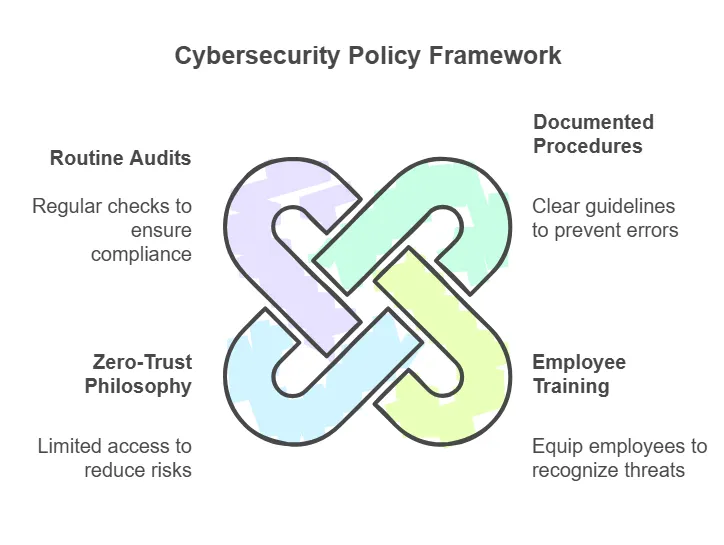
Crafting robust policies is one of the easiest yet most overlooked ways to protect your network. When done correctly, these guidelines create a safety net against human error, negligence, and malicious insider threats. Here’s how to make yours count:
- Clearly Document Procedures
Whether it’s password requirements or incident reporting, spell out all rules and expectations. This leaves no room for guesswork and significantly reduces the risk of simple mistakes. - Regular Employee Training
Employees are your first (and sometimes only) line of defense. Equip them with knowledge about phishing red flags, safe internet habits, and secure data handling. Conduct workshops or quick refreshers every few months to keep best practices top of mind. - Adopt a Zero-Trust Philosophy
The principle of least privilege ensures that each user only has access to the data and tools they truly need. By compartmentalizing access, you limit the reach of anyone—internal or external—who might seek to misuse legitimate credentials. - Routine Auditing and Compliance Checks
Policies that look great on paper can lose their impact if nobody checks for violations. Schedule periodic reviews of user permissions, software licenses, and security configurations to ensure your policies stay relevant and effective.
Proven Ways to Combat Cyber Vulnerabilities
Even with smart policies in place, cyber vulnerabilities can still creep in through software glitches or overlooked configuration gaps. Here are some tried-and-true approaches to bolster your network’s defenses:
- Scheduled Patching and Updates
Outdated software is like leaving your front door unlocked. Make regular patching a non-negotiable practice. Automate what you can, and maintain a calendar for critical updates so nothing slips through the cracks. - Strengthened Endpoint Protection
Every device on your network is a potential entry point. Firewalls, antivirus tools, and encryption software should be standard. For added peace of mind, consider using mobile device management (MDM) solutions that handle security for smartphones and tablets connecting to your network. - Automated Alerts and Monitoring
Real-time monitoring systems can catch abnormal traffic patterns or unauthorized login attempts the moment they occur. Setting up alerts for suspicious spikes or repeated failed logins allows you to respond before a minor issue becomes a full-blown breach. - Containment and Isolation
If a threat is detected, swift isolation is key. Segment your network into smaller zones so attackers or malware can’t freely roam. Infected hosts should be quarantined instantly to prevent the spread of malicious files or code. - Regular Security Assessments
Conduct periodic penetration tests and vulnerability scans to proactively uncover hidden risks. By thinking like an attacker, you’ll identify and patch weak spots long before threat actors find them.
| Gain More Insights on Keep Your IT Secure |
Stopping Cyber Threats and Vulnerabilities at the Source
Cyber threats and vulnerabilities evolve constantly, but your best defense is staying a step ahead. Intrusion Detection Systems (IDS) monitor traffic for malicious activity, while Intrusion Prevention Systems (IPS) can neutralize threats in real time. Together, they form a robust shield that identifies suspicious patterns before damage occurs.
Network segmentation also helps. By splitting your network into smaller, isolated zones, you prevent an attacker who breaches one area from moving laterally across your entire infrastructure. Combine this with regular monitoring, and you’ll quickly spot anomalies like unexpected data transfers or login attempts at odd hours.
Why Information Security Vulnerabilities Require Ongoing Monitoring
Unlike a one-time event, information security vulnerabilities are a moving target. Threat actors constantly develop new exploits and social engineering tricks. That’s why ongoing monitoring is a must. Implementing a Security Information and Event Management (SIEM) system can help you collect, analyze, and correlate security data from various sources.
Use threat intelligence feeds to stay informed about emerging attack methods. Continuous monitoring helps you adapt swiftly, plugging holes as soon as they’re discovered.
Investigate if something suspicious pops up—even if it’s just a small anomaly. You’d rather chase down a harmless false alarm than miss a devastating breach.
Arm Yourself, Stay Vigilant, Attackers Don’t Sleep
Attackers have no shortage of tactics. From phishing emails designed to trick users into divulging credentials to distributed denial-of-service (DDoS) barrages that cripple services, you need to prepare for all types of attacks in network security. Ransomware can lock you out of vital data unless you pay a hefty sum—sometimes with no guarantee you’ll actually regain access.
The best defense is a solid incident response plan. Instruct your team on immediate steps to take during each type of assault. Containing the threat quickly can significantly reduce downtime and data loss. Regular drills also help employees react calmly under pressure.
Quick-Reference Overview
| Vulnerability | Description | Recommended Action |
| Weak/Default Credentials | Using simple or unchanged default passwords | Enforce password policies & MFA |
| Unpatched Software/OS | Outdated systems with known exploits | Automatic & routine patch management |
| Misconfigured Firewall/Network | Unsecured open ports or permissive firewall rules | Regular audits & configuration reviews |
| Lack of Monitoring/Alert Systems | No real-time detection of suspicious activity | Deploy IDS/IPS & SIEM solutions |
| Inadequate Segmentation | Flat networks allow attackers lateral movement | Segment network & isolate key resources |
Secure Your Business Today with Kenyatta Computer Services
You’ve learned how network vulnerabilities can open the door to data breaches, downtime, and steep regulatory penalties. From spotting network security vulnerabilities early to arming yourself against every imaginable threat, a proactive strategy is your best defense.
As a leading Managed Service Provider (MSP), Kenyatta Computer Services excels at delivering customized cybersecurity solutions, safeguarding your critical data, and preserving customer trust. Ready to fortify your operations?
Reach out to Kenyatta Computer Services for a detailed assessment and tailored protection plan. Don’t leave your network exposed—take the first step toward solid, long-term security today.
| Enhance Your Security Program With Expert Help in Denver, CO! | ||
| Cybersecurity | IT Network Support | IT Consultants |